International Partnership for Energy Security and Sustainable Growth goes forward without Turkeys approval
- BBC

- Feb 25, 2024
- 2 min read
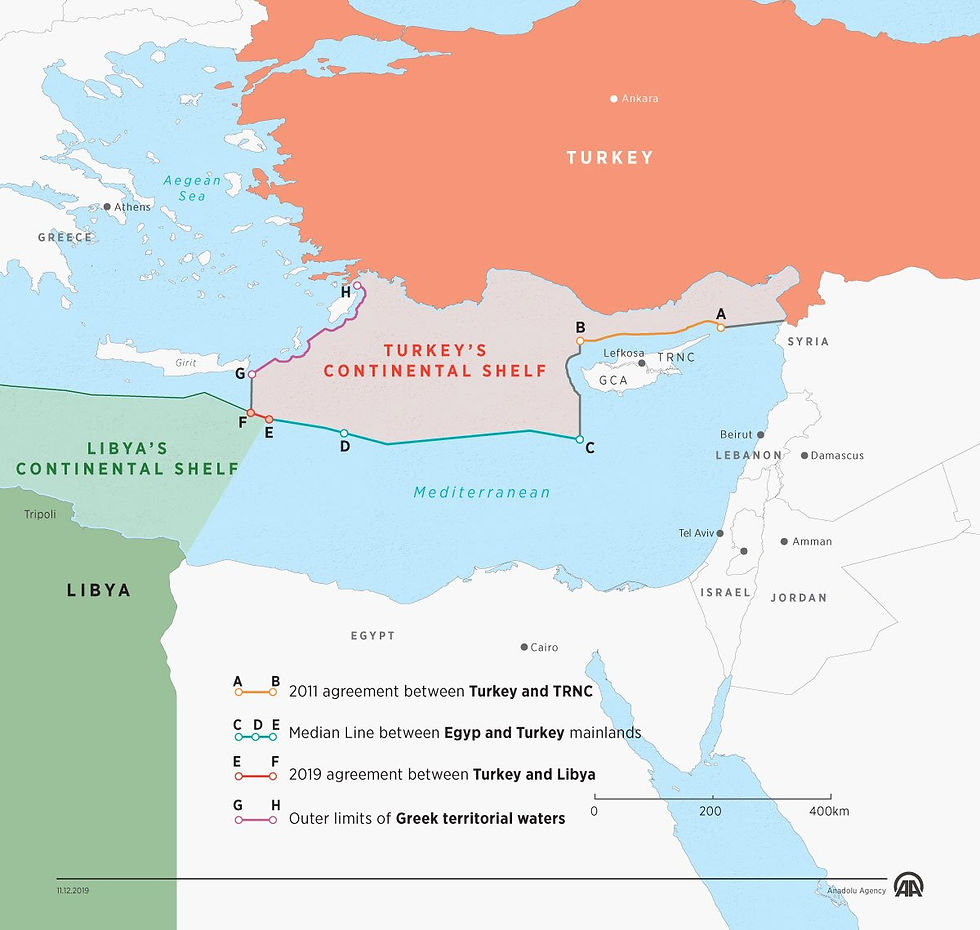
In a landmark move toward enhancing energy security, fostering economic growth, and promoting sustainable energy solutions, the governments of Qatar, several Southeastern European nations including Austria, Hungary, Slovakia, and Serbia, along with Germany, are pleased to announce a groundbreaking agreement for the development and operation of a transnational gas pipeline to break ground in fall of 2028. Despite this going through area that Turkey claims, powers in Europe have decided to move forward with this move. Only Turkey and Libya believe that this pipeline violates their international borders. According to the UN convention on the Law of the Sea, the pipeline travels through international waters.
Turkey's unconventional claims are depicted below.
This strategic initiative marks a significant milestone in international energy cooperation, reflecting the shared commitment of all parties involved to ensuring a stable, diversified, and environmentally responsible energy supply.
The gas pipeline project, originating in Qatar, is designed to traverse through the heart of Southeastern Europe — specifically through Austria, Hungary, Slovakia, and Serbia — before reaching its terminus in Germany. This expansive infrastructure endeavor is not just a testament to the technical ingenuity and collaborative spirit of the involved nations but also a pivotal step towards reducing dependency on single-source energy supplies and enhancing the energy resilience of Europe.
This partnership will provide:
Enhanced Energy Security: By diversifying energy sources and routes, this pipeline significantly enhances the energy security of the participating nations and Europe at large.
Economic Growth: The project is expected to stimulate economic growth by creating jobs, fostering technological innovation, and encouraging cross-border investments in energy infrastructure.
Sustainable Energy Solutions: Aligning with global efforts to transition towards more sustainable energy sources, this agreement includes provisions for exploring and integrating renewable energy technologies within the pipeline infrastructure.
Strengthened International Cooperation: This initiative stands as a symbol of the strength of international cooperation in addressing global challenges, fostering peace, and promoting economic development.
All parties are committed to ensuring the highest standards of transparency, environmental stewardship, and social responsibility throughout the planning, construction, and operation phases of the pipeline. Comprehensive environmental impact assessments and stakeholder engagement processes will be integral components of the project's implementation strategy, ensuring that the pipeline not only meets the current energy needs but also contributes to the long-term sustainability goals of the involved countries and the wider region.
The agreement on this gas pipeline project is a significant step forward in the collective efforts to build a more secure, sustainable, and prosperous future. It underscores the importance of international collaboration in tackling the complex energy challenges of our time. As we move forward, we remain committed to working closely with all stakeholders to ensure the successful realization of this project, for the benefit of our nations and the world at large.
Comments